


GU10 is a widely used lamp format, but a standard retail bulb is not automatically the best choice for every cooker hood. EDEG works with range hood manufacturers to develop GU10 lighting around the appliance structure, electrical system, optical target and service environment. The result is a customer-specific solution—not a claim that GU10 can only be used in range hoods.
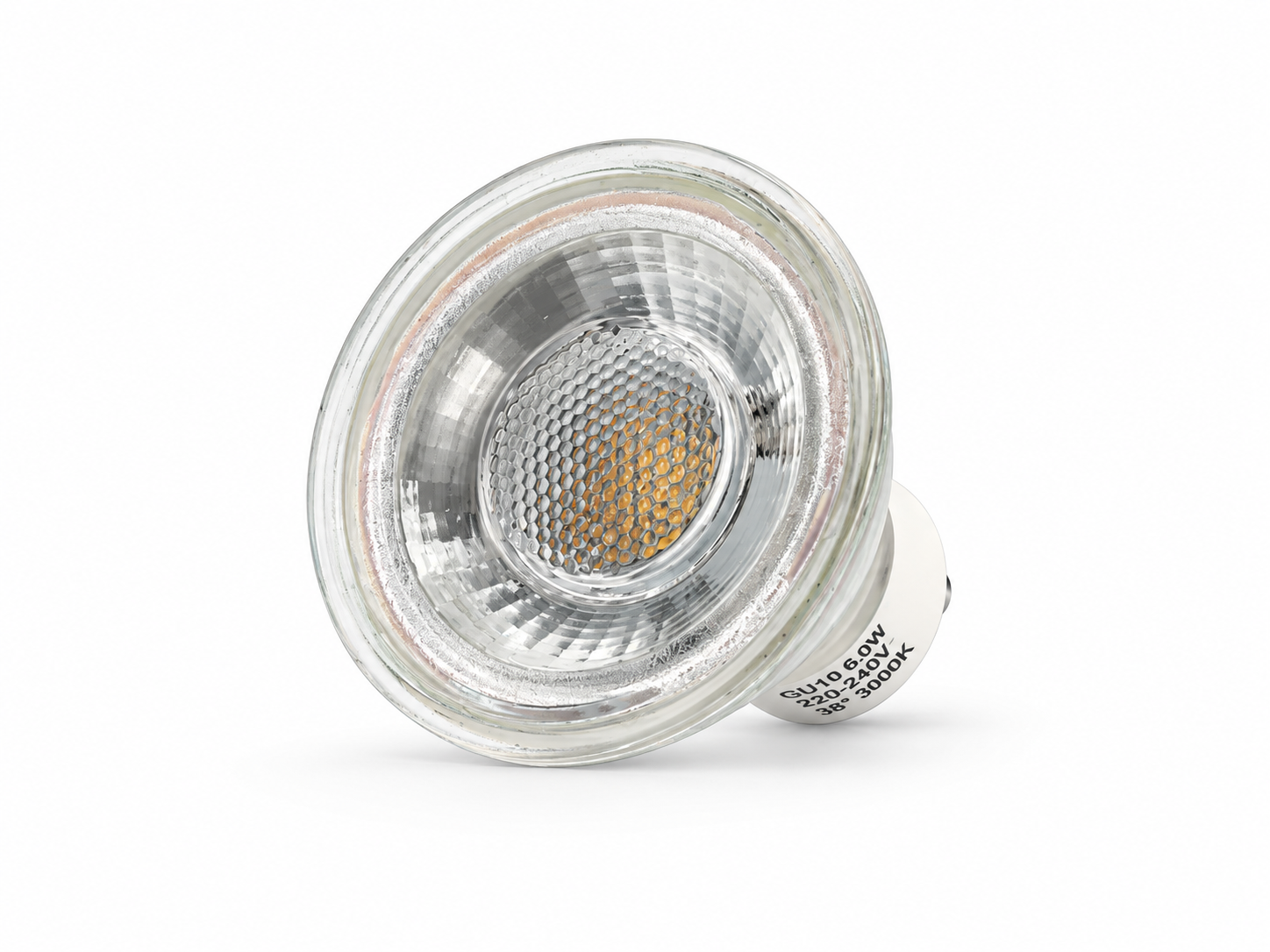
Why develop a GU10 lamp specifically around a range hood?
Inside a cooker hood, the lamp works close to heat, steam, grease and frequent switching. The available cavity, bezel, lampholder, wiring route and ventilation conditions can also differ between appliance platforms. A successful project therefore starts with the hood—not only with the bulb.
- Mechanical envelope and installation clearance
- GU10 pin spacing and holder compatibility
- Beam distribution over the cooking surface
- Requested color temperature and visual comfort
- Input voltage, power target and driver architecture
- Thermal management, sealing and service access
- OEM labeling, packaging and batch validation
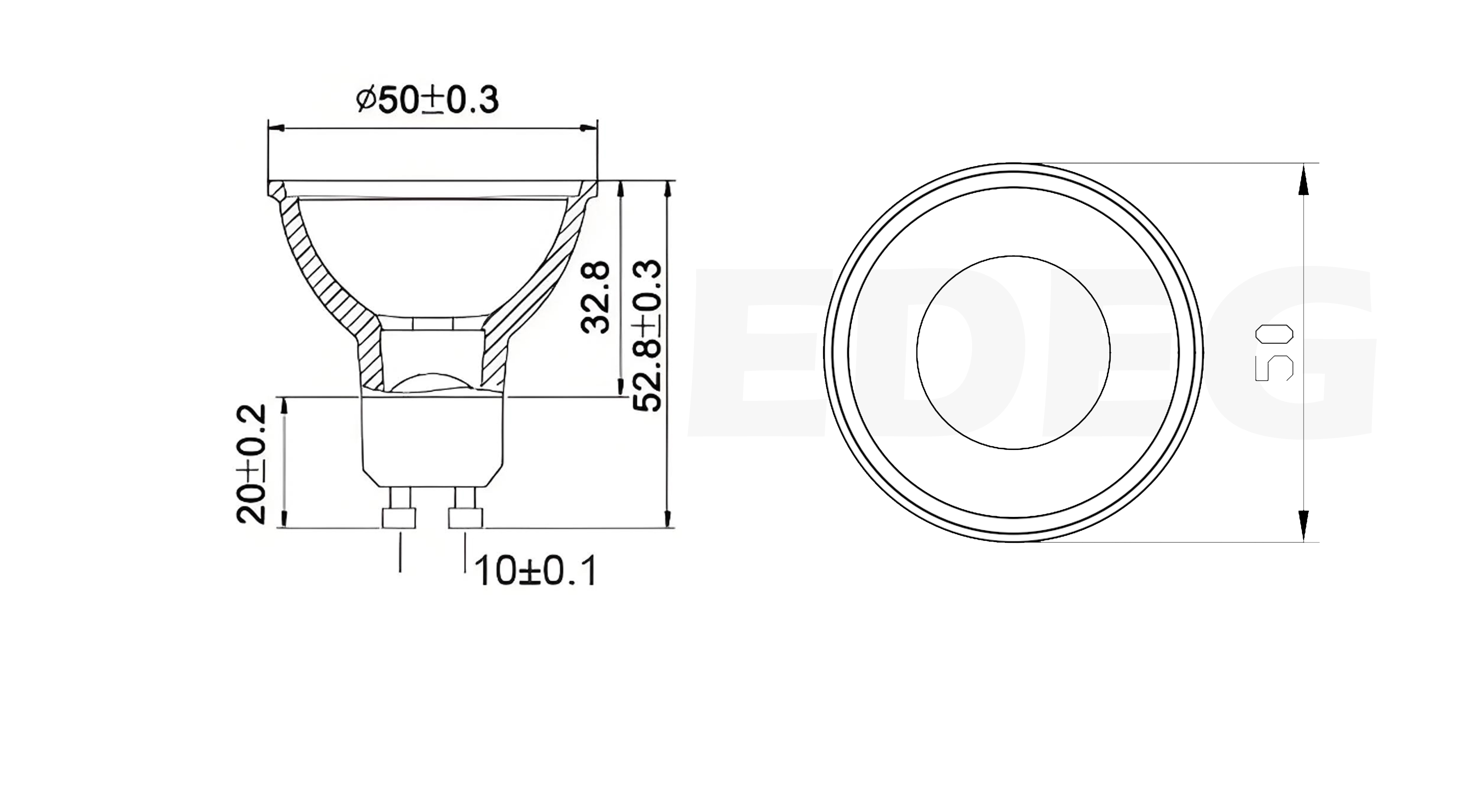
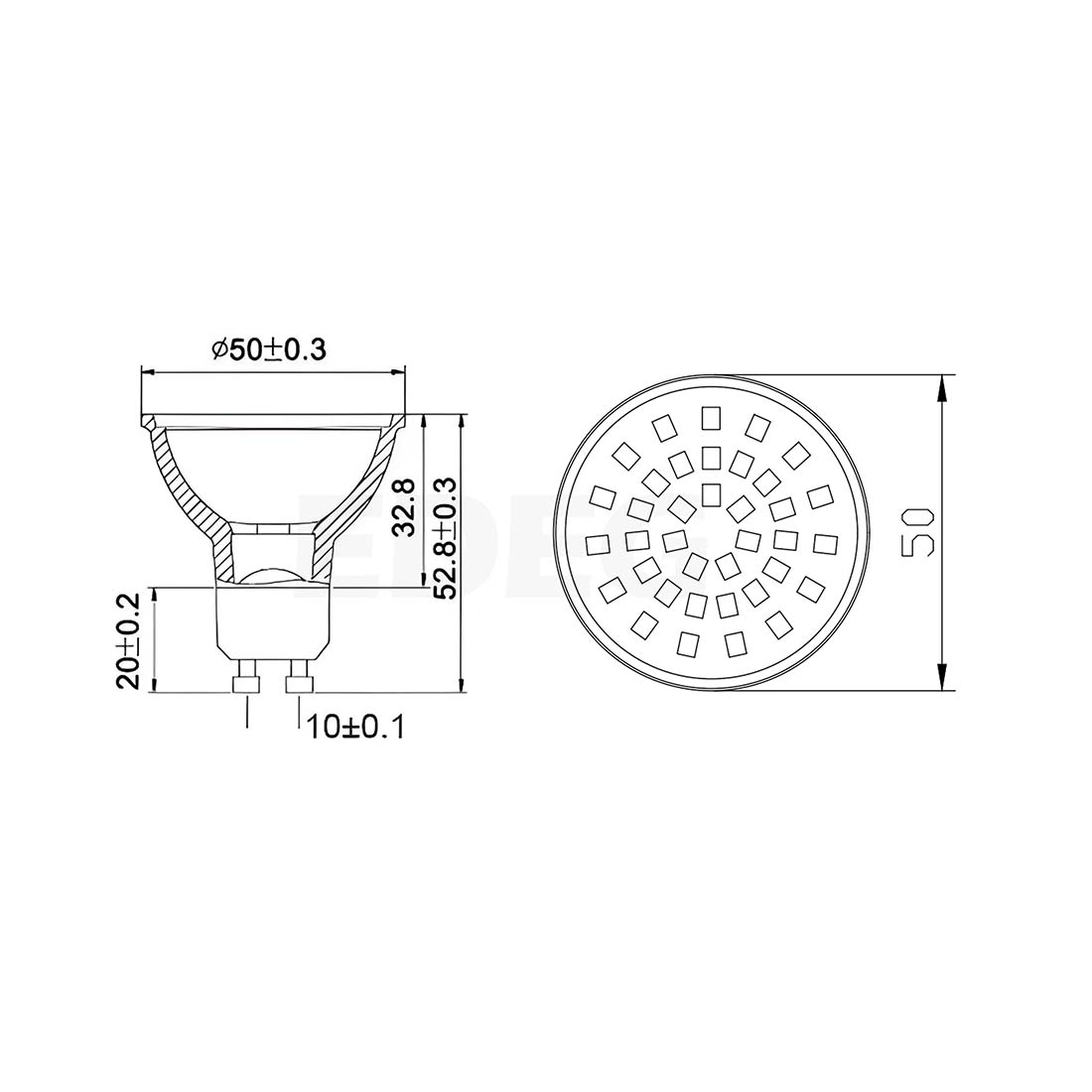
Reference mechanical envelope
The reference drawing below shows a nominal 50 mm face, an overall height of approximately 52.8 mm and standard GU10 pin geometry. These dimensions are a development reference only; tolerances must be confirmed against the customer's housing, holder and retention parts before mass production.
Multiple light-engine options for OEM projects
One appliance family may need a compact focused beam, while another benefits from a broader luminous surface. EDEG can evaluate different LED arrangements, reflector structures and optical covers according to the customer's target appearance and illumination pattern.
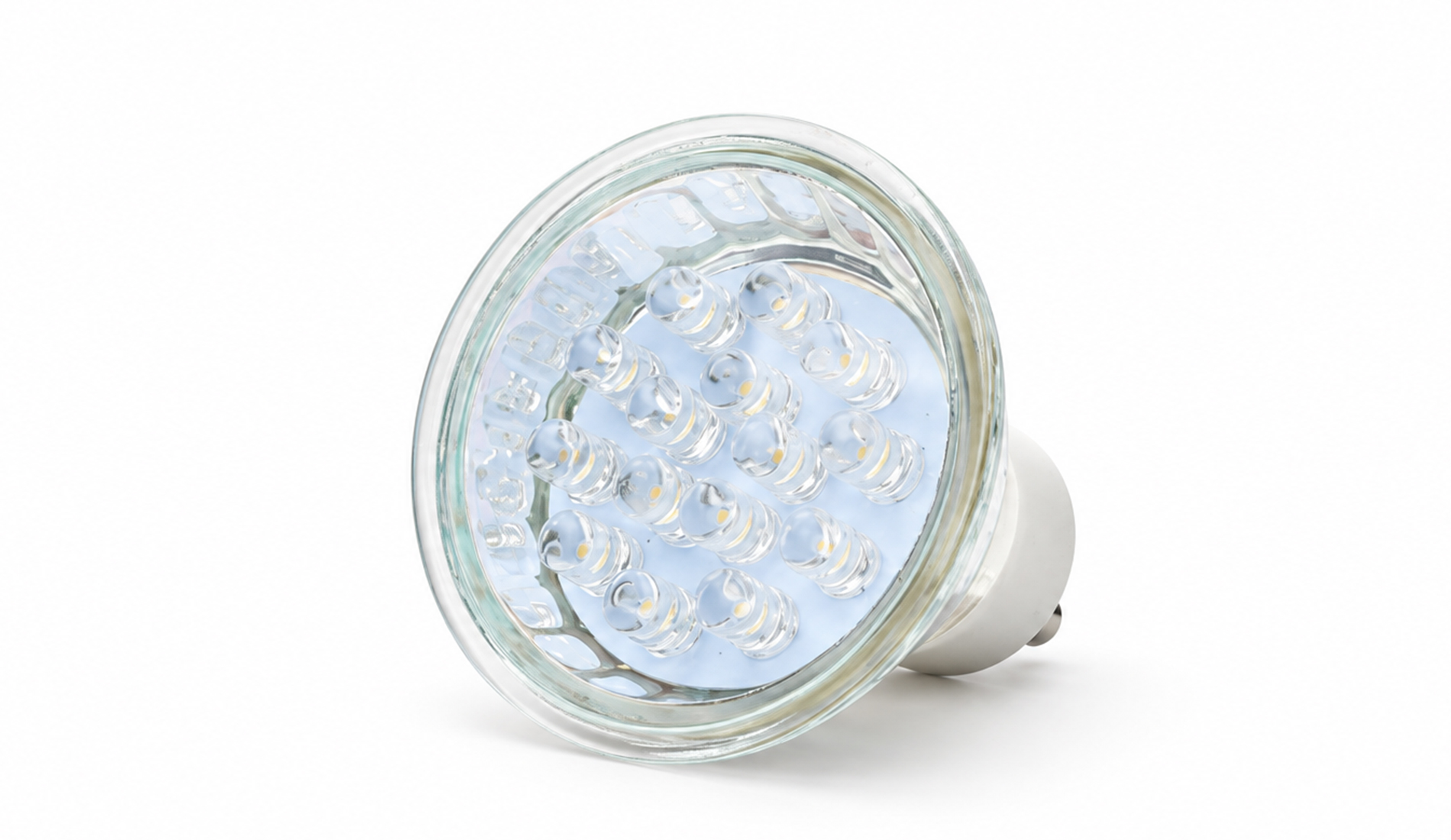
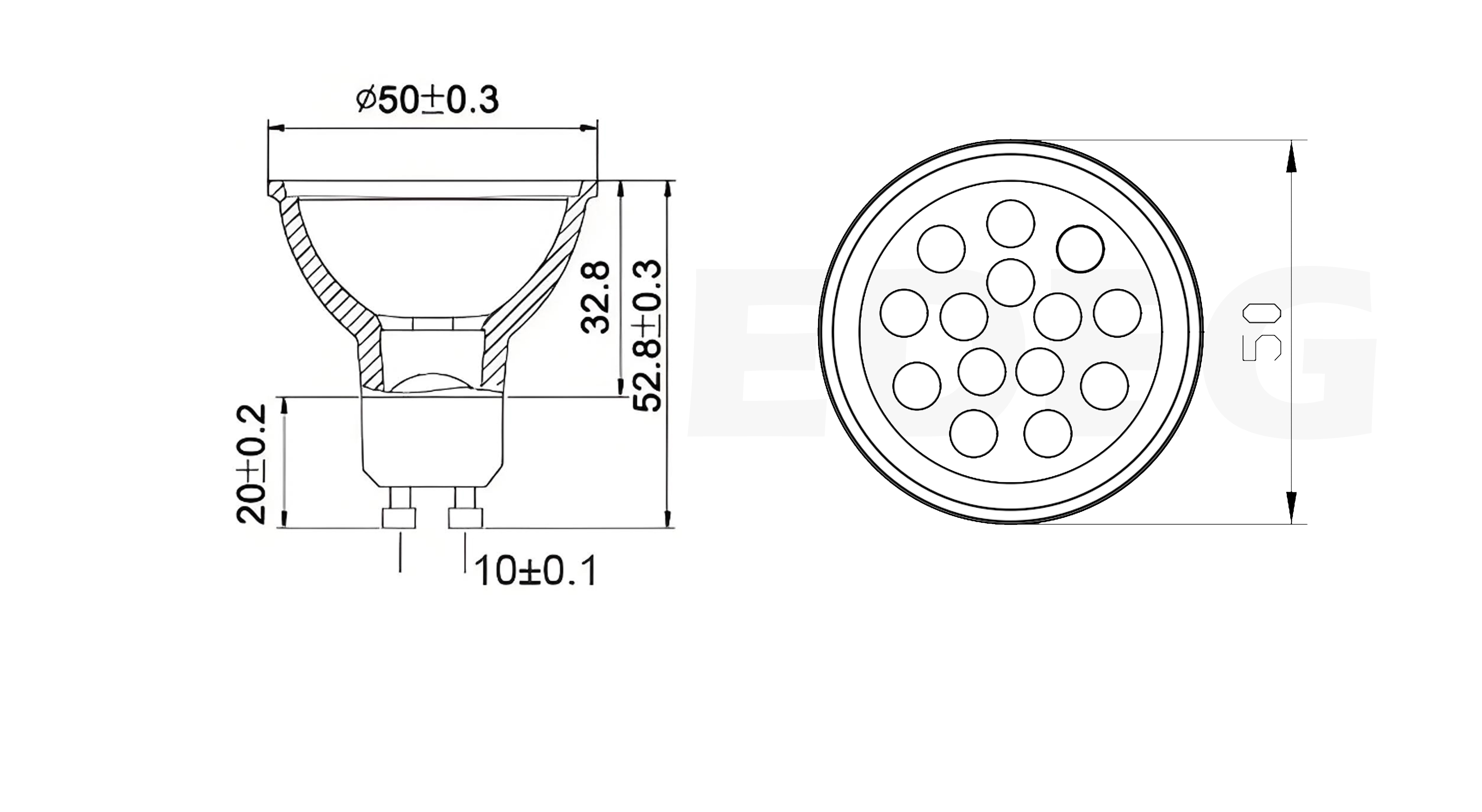
15-LED array option
A visible multi-LED layout can provide a distinctive technical appearance and distribute light across the reflector face. LED quantity alone does not define performance; current, optics, thermal path and diffusion must be engineered together.
52-LED wide luminous surface
A higher-density LED layout can create a broad illuminated face and can be tuned for warm, neutral or cool appearance. The final circuit and operating point are selected after electrical and thermal validation inside the customer's actual hood assembly.
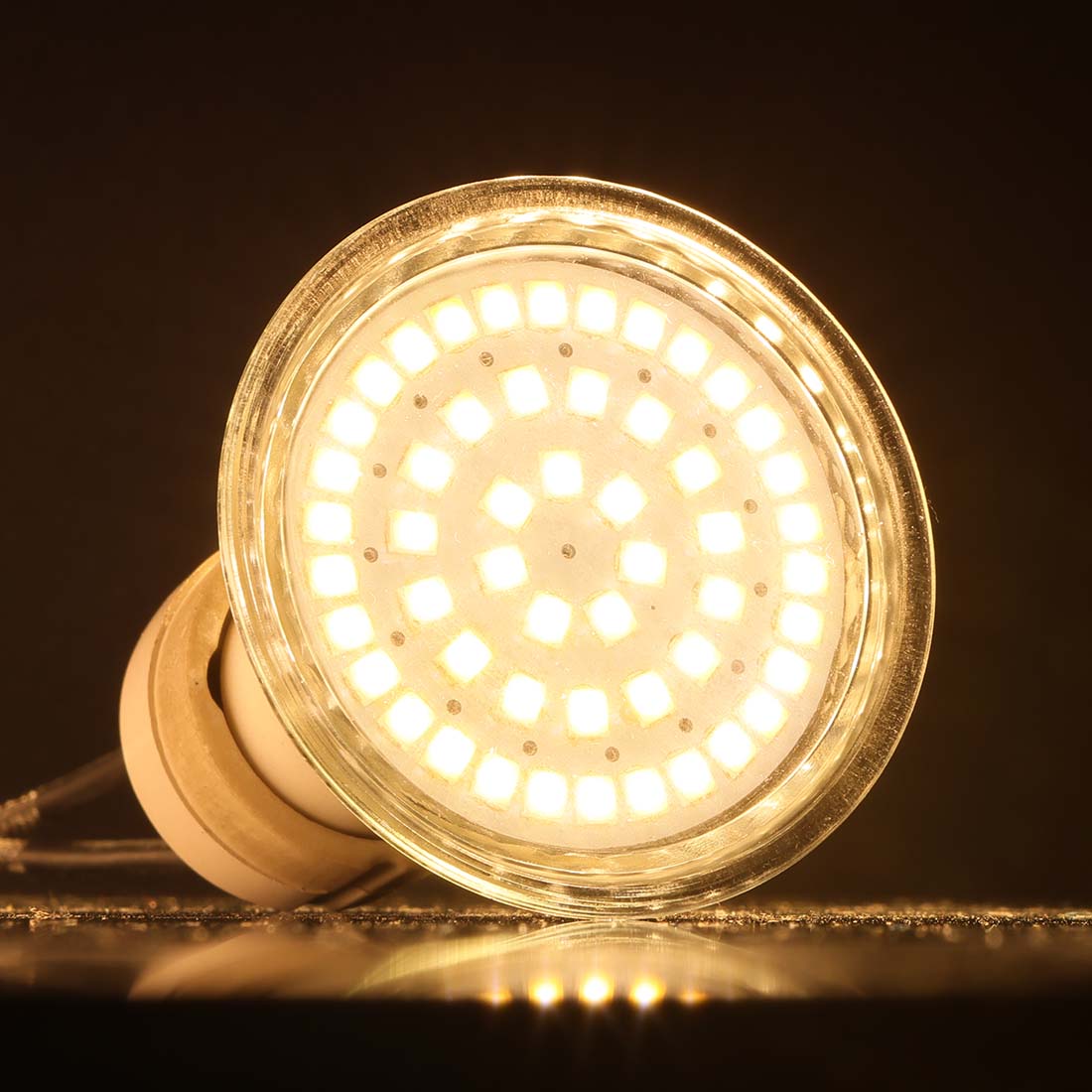
LED and halogen-reference development
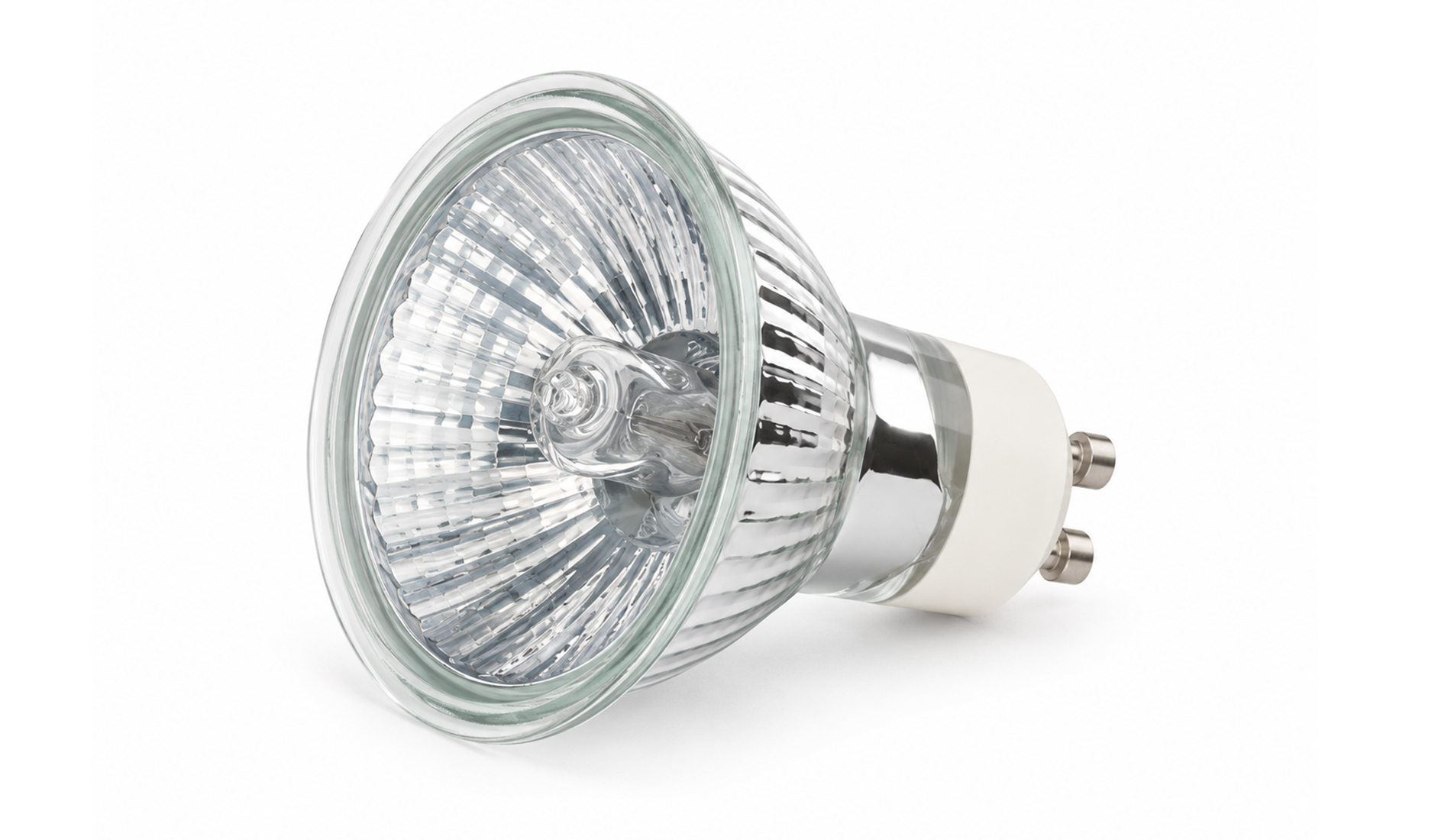
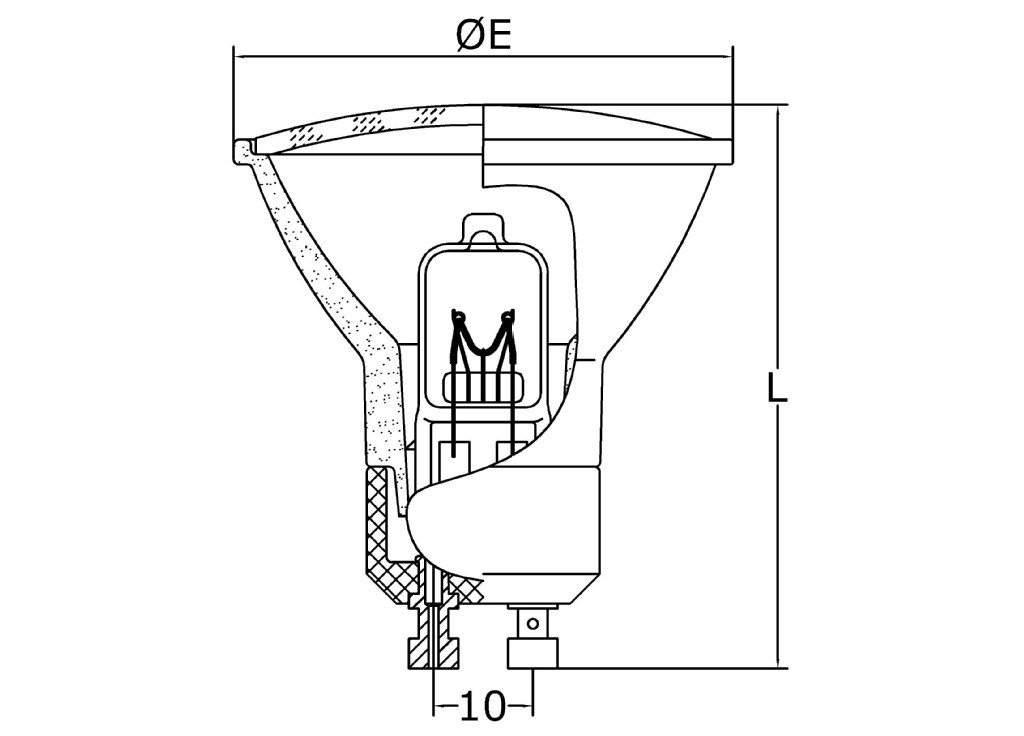
Many established range hood platforms were originally designed around halogen GU10 lamps. When a customer upgrades to LED, the project may need to preserve the familiar outer envelope and holder interface while changing the light source, heat profile and optical behavior. We use the original lamp and appliance requirements as references, then validate the new configuration rather than assuming a direct one-for-one substitution.
What can be customized?
| Item | Typical OEM decisions |
|---|---|
| Optical design | Beam angle, reflector, lens, diffusion and illuminated appearance |
| Light quality | Color temperature, color consistency, brightness target and glare control |
| Electrical | Input voltage, wattage target, driver solution, connector and switching conditions |
| Mechanical | Outer size, overall height, holder fit, bezel compatibility and cable routing |
| Commercial | Brand marking, labels, packaging, inspection criteria and production documentation |
Development workflow for range hood manufacturers
- Requirement review: hood drawings, lamp cavity, holder, voltage, target light output and market requirements.
- Concept matching: select a suitable GU10 architecture and define mechanical, electrical and optical targets.
- Prototype: prepare samples for fit, appearance and illumination evaluation.
- Appliance-level validation: test the approved construction in the customer's actual hood environment.
- Production control: freeze specifications, drawings, labels and agreed inspection standards.
Built on approximately 20 years of range hood lighting experience
EDEG has focused on lighting solutions for range hoods for approximately 20 years. That experience helps our team communicate with appliance engineers about fit, wiring, heat, optics and manufacturing—not only about a lamp catalogue number. We support OEM and ODM projects for new models, replacement programs and platform upgrades.
Start your custom GU10 project
Send us the hood drawing, installation space, holder information, voltage, target color temperature, desired beam and annual quantity. EDEG will review the requirements and recommend a practical development route. Final specifications and compliance testing are confirmed against the approved construction and target market.
Contact EDEG for a custom GU10 range hood lighting proposal.


